Choosing the right hair restoration method is a decision that impacts your daily comfort, confidence, and lifestyle.
For many in the Gulf region, where the climate is warm, finding a balance between a natural look and practical maintenance is key.
Whether you are dealing with thinning hair or simply want to enhance your look, understanding the hair patch fixing methods is the first step toward healthy hair.
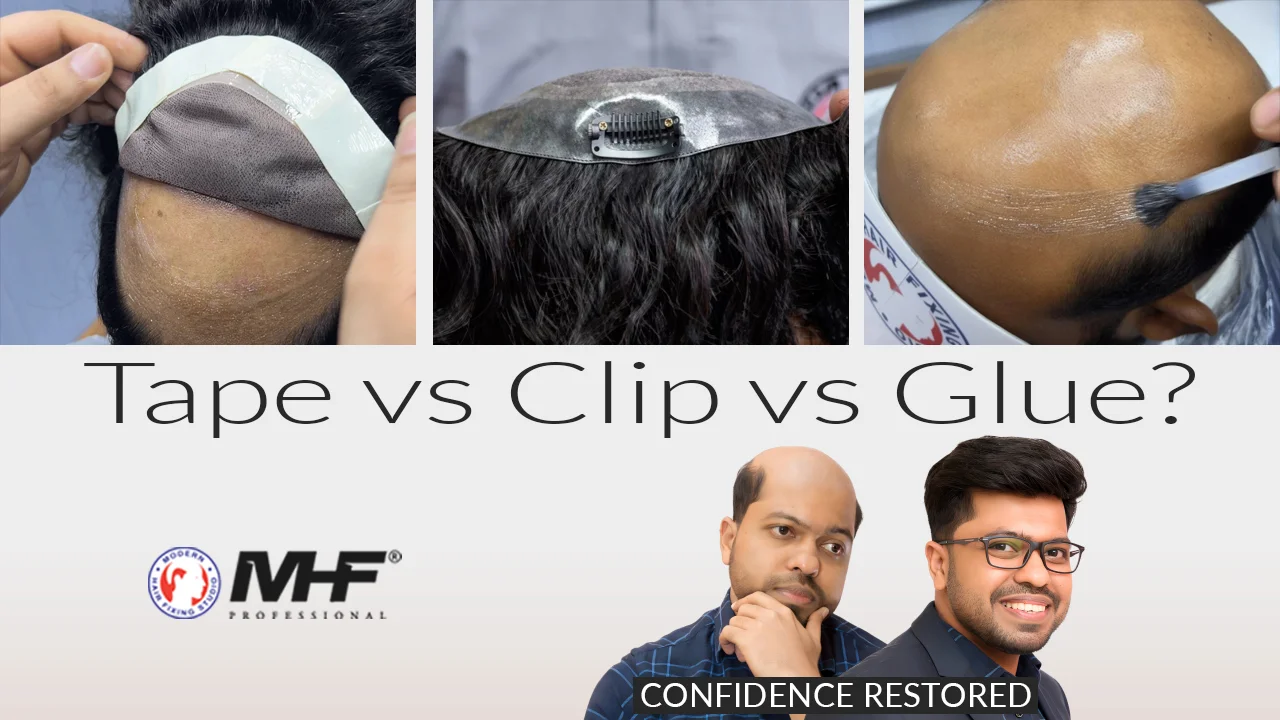
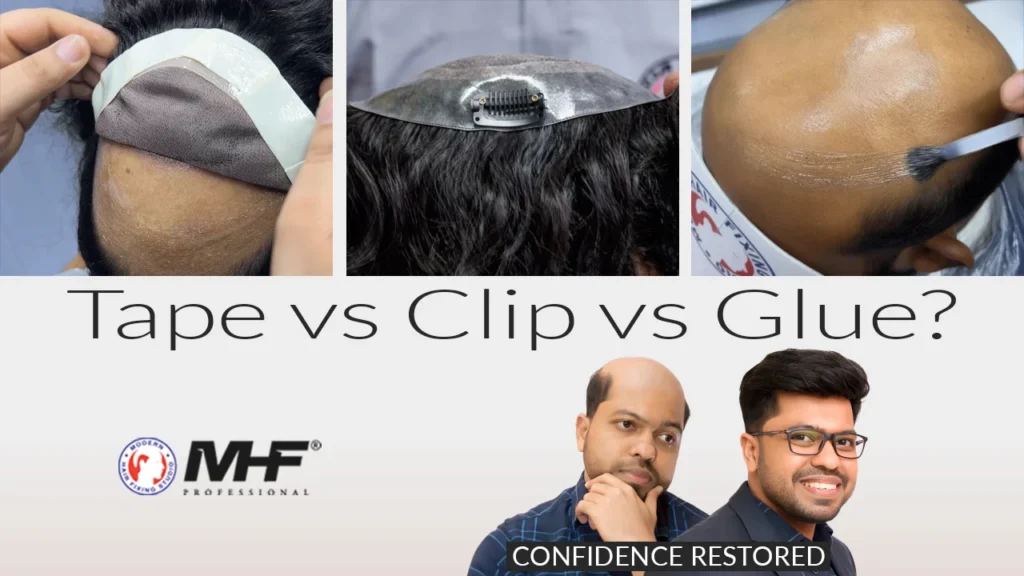
In this guide, we explore the tape vs glue vs clipping hair debate to help you decide which is right for you.
1. The Clipping Method: Flexibility First
The clipping method is the most non-invasive of all hair fixing methods comparison.
It uses small, pressure-sensitive clips to attach the hair system to your existing hair.
- Best For: Those who want to remove their hair system every night or only wear it for special occasions.
- Pros: It is very easy to manage at home.
- Cons: It requires a sufficient amount of healthy natural hair to clip onto and may feel less secure during physical activities.
2. Tape Attachment: The Middle Ground
When comparing tape or glue for hair system use, many people start with tape.
This involves medical-grade, double-sided adhesive strips placed along the perimeter of the hair patch.
- Best For: Individuals with a semi-active lifestyle who want a secure fit that lasts 1 to 2 weeks.
- Pros: Tape is generally easier to clean than liquid adhesives. It also feels light weighted.
- Cons: The edges might feel slightly thicker as compared to liquid glue.
3. Liquid Glue (Bonding): The Seamless Look
Liquid bonding is often considered the best hair system attachment method for those seeking a “skin-like” finish.
A thin layer of adhesive is applied to the scalp, creating a strong, continuous bond.
- Best For: People with active lifestyles, or those who want to wear their system for 3 to 4 weeks without removal.
- Pros: It offers the most natural-looking hairline.
- Cons: It requires more skill to apply and clean.
Regular maintenance at a professional center like Modern Hair Fixing is recommended to keep the scalp healthy.
In Conclusion
The right choice depends on your personal priorities. If you value convenience, clipping is excellent. If you prioritize a long-term bond that suits the heat and humidity of the Gulf, glue is the best choice. For those seeking a balance of both, tape is reliable.
Non-surgical hair replacement, when done correctly, provides a natural and comfortable solution to visible hair loss.
Visit Modern Hair Fixing at our GCC branches:
- UAE: Dubai | Abu Dhabi | Sharjah
- Oman: Muscat (Ruwi and Azaiba)
- Kuwait: Kuwait City
- Saudi Arabia: Riyadh
You may also contact us via WhatsApp at https://wa.me/971569697169 to book a consultation.
Frequently Asked Questions (FAQ)
Q1: Is the glue method safe for sensitive skin in hot weather?
Yes. We use high-quality, hypoallergenic medical adhesives specifically designed to be skin-safe and water-resistant, even in humid climates.
Q2: How often do I need to service a taped hair system?
Typically, a taped system needs a professional “re-servicing” every 10 to 15 days to ensure the bond remains strong and the scalp stays clean.
Q3: Can I swim or shower with a hair system attached with glue?
Absolutely. Once the bond has cured (usually 24 hours), liquid adhesives are fully waterproof, allowing you to maintain an active lifestyle.
Q4: Will the clips damage my remaining natural hair?
If used correctly and not clipped too tightly, they are safe. However, we recommend rotating the clip positions slightly to avoid any tension.
Q5: Which method is the most cost-effective in the long run?
Clipping is the most budget-friendly as it requires fewer consumables. However, many find the “seamless look” of glue worth the extra maintenance.
Q6: Can I switch between tape and glue for the same hair patch?
Yes, many systems are compatible with both. Our experts can help you transition between methods based on your changing needs or the season.